
As we commemorate the 100th anniversary of what would become Black History Month, I want to reflect on a fundamental aspect of our history that often goes uncelebrated: the legacy of care and caregiving in Black and African American communities.
This year’s theme, “A Century of Black History Commemorations,” invites us to honor not just the famous names in history books, but the everyday caregivers whose hands have held our communities together through generations.
Carter G. Woodson, born to formerly enslaved parents, understood that education was the path to self-empowerment. What he also understood, and what we must reclaim today is that care work is equally foundational to community empowerment. For generations, Black caregivers have been the unsung architects of our resilience.
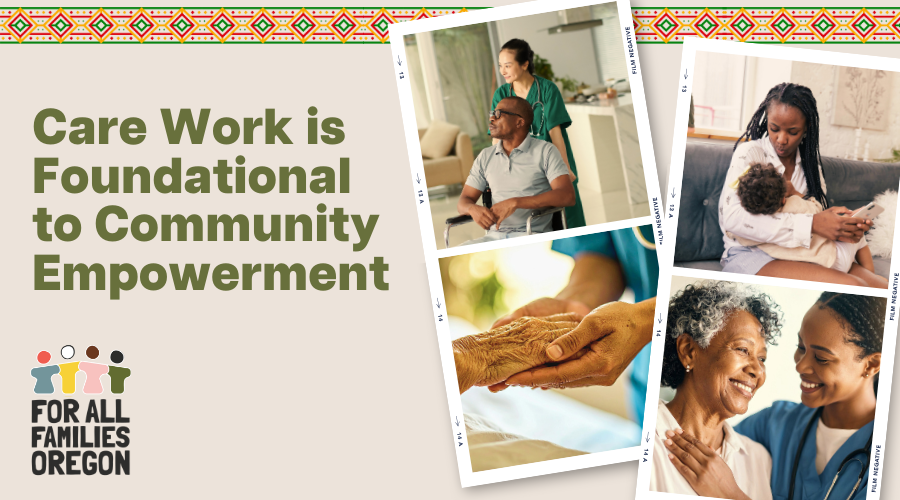
Today, care workers — overwhelmingly Black, brown, and melanated women — continue this tradition under increasingly difficult conditions. The same hands that care for us and our loved ones are often paid less than a living wage, with some facing reclassification that could drop their pay to $7.25 an hour.
To quote Audre Lorde, “Your silence will not protect you… And at last you’ll know with surpassing certainty that only one thing is more frightening than speaking your truth. And that is not speaking.”
It is this idea that drives what we do here at FAFO! We work in community to build power for future generations by ensuring today’s parents and caregivers are supported.
And right now in Salem, our legislature is meeting for a very short session of just 35 days. They’re working to pass bills and determine budgets — tangible moral decrees on what is deemed most important. During legislative session, we can show up and demand our lawmakers invest in our communities instead of prioritizing corporations and the ultra wealthy.
We’ll be in Salem on the 16th for the Child Care For Oregon (CCFO) Day of Action to tell our lawmakers: it’s time to support working families. We’d love for you to join us in speaking our truths.
Learn more about this year’s legislative session and get involved here.

Mientras conmemoramos el centenario de lo que se convertiría en el Mes de la Historia Negra, quiero reflexionar sobre un aspecto fundamental de nuestra historia que a menudo pasa desapercibido: el legado del cuidado y las cuidadoras en las comunidades negras y afroamericanas.
El tema de este año, “un siglo de conmemoraciones de la historia negra”, nos invita a honrar no solo los nombres de las personas famosas en los libros de historia, sino a las cuidadoras cotidianas cuyas manos han mantenido unidas a nuestras comunidades a través de generaciones.
Carter G. Woodson, nacido de padres que fueron esclavizados, entendió que la educación era el camino hacia la auto-capacitación. Lo que también entendió, y lo que debemos reclamar hoy, es que el trabajo del cuidado es igualmente fundamental para el empoderamiento comunitario. Durante generaciones, las cuidadoras negras han sido las arquitectas no reconocidas de nuestra resiliencia.
Hoy, las trabajadoras del cuidado — en una mayoría abrumadora, mujeres negras y de piel morena— continúan esta tradición bajo condiciones cada vez más difíciles. Las mismas manos que nos cuidan a nosotras y a nuestros seres queridos a menudo reciben un salario inferior al mínimo vital, y algunas enfrentan reclasificaciones que podrían reducir su pago a $7.25 la hora.
Para citar a Audre Lorde: “Tu silencio no te protegerá… y al fin sabrás con certeza incomparable que solo una cosa es más aterradora que hablar tu verdad. Y eso es no hablar.” Es esta idea lo que impulsa lo que hacemos aquí en FAFO. Trabajamos en comunidad para construir poder para las generaciones futuras, asegurando que las madres, padres y cuidadoras de hoy tengan apoyo.
En este momento en Salem, nuestra legislatura se reúne para una sesión muy corta de tan solo 35 días. Están trabajando para aprobar proyectos de ley y determinar presupuestos, decretos morales tangibles sobre lo que se considera más importante. Durante este tiempo, podemos presentarnos y exigir que inviertan en nuestras comunidades en lugar de priorizar a las corporaciones y los ultra ricos.
Estaremos en Salem para decirles a nuestras legisladoras y legisladores: es hora de apoyar a las familias trabajadoras. Nos encantaría que te unieras a nosotras para hablar sobre nuestras verdades.
Obtenga más información sobre la sesión legislativa de este año y tome acción aquí.